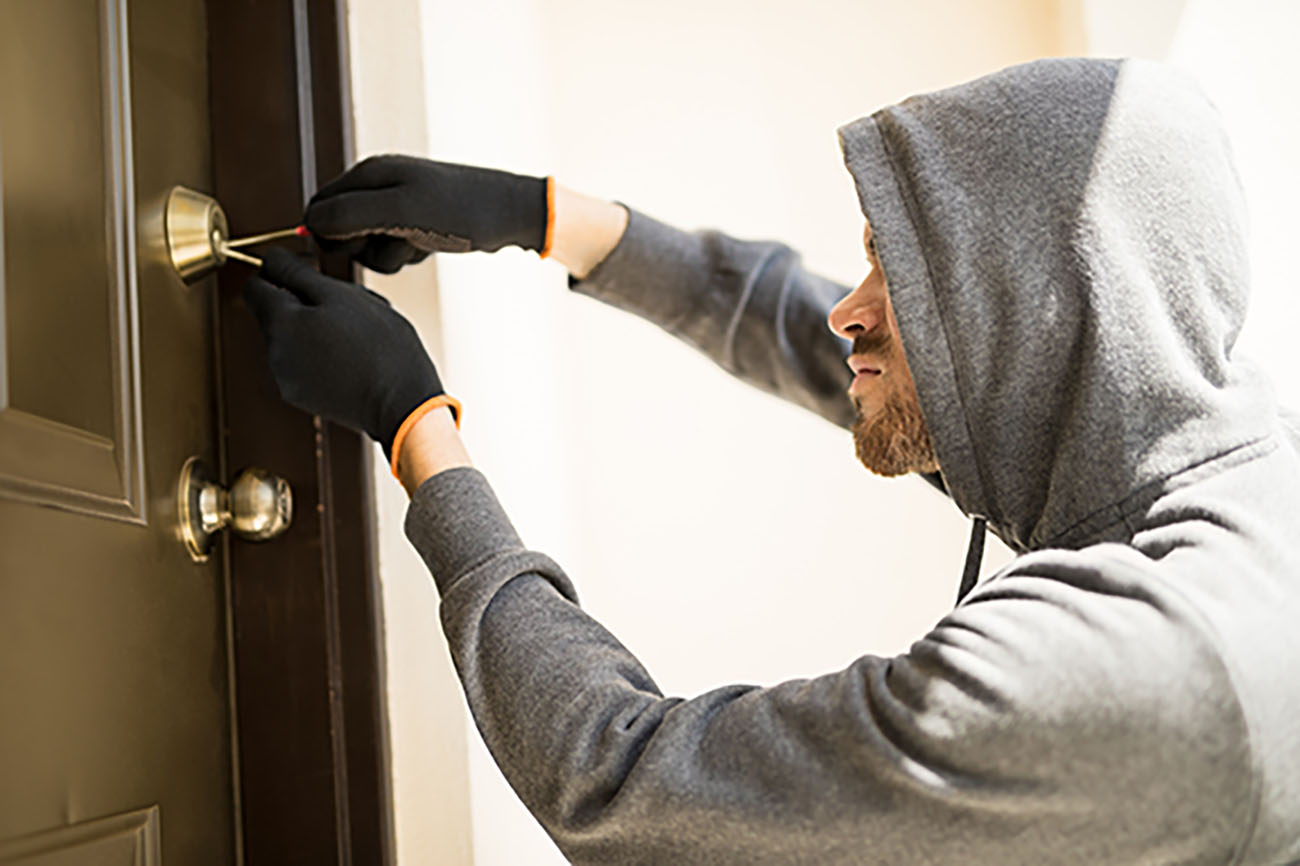
According to the Insurance Information Institute, if a burglar thinks it will take more than four or five minutes to break into a house, they are likely to move on to another, more exposed property. So, every measure a homeowner takes to slow them down is well worth the time and energy it may take to implement. However, many preventative measures are relatively simple and inexpensive. Here are 18 ways to protect your home from the inside and outside.
- Look for vulnerable spots. Walk around your home’s exterior with an eye out for windows that could be easily pried open or with a clear view of your flat-screen TV and other valuables. Better yet, contact your local police department to see if they offer a home security check. They will scour your home, inside and outside, and alert you to weak points.
- Lock doors and windows. Shore up one of the main entry points of home break-ins—your first-floor windows—by installing a wireless alarm kit. For as little as $30, you will get an alarm that sounds when a window is opened and more peace of mind.
- Landscape strategically. Think thorny rose bushes under easy-to-access windows. And trim your shrubs so thieves cannot hide behind them. Gravel walkways and driveways also work well to signal the presence of an unwanted visitor.
- Put up a fence. Chain-link or ornamental metal fences secured by concrete pillars work best to keep intruders out. Solid fences with pointed tops are another good option.
- Install double-key dead bolts. Believe it or not, many intruders simply let themselves in through a home’s front door. Consider getting double-key dead bolts, which require two keys, one to enter and one to exit, so they are more secure.
- Upgrade doors and locks. Thick wood doors are hard to kick in and can thwart a break-in. For doors with windows that can be broken, install a floor lock to keep a burglar from reaching in and unlocking the door.
- Install motion-sensor lighting. Motion detectors are excellent deterrents. Position them at entrances and dark spots around your home’s perimeter. Live in an apartment with a dark parking lot or hallway? Ask your landlord to update the lighting in common areas.
- Invest in a home security system. Installing a home alarm system is one of the most foolproof ways to prevent burglary. Or you can go one step further and install security cameras, preferably with night vision and a hard drive to store video recordings.
- Secure sliders. Sliding glass doors tend to be easy to unlock and slide open. The solution? Stick a broom handle in the track to keep it secure.
- Hope for the best and prepare for the worst. Play it safe in case your computer is stolen by backing it up. Then, stash your hard drive somewhere unexpected, like a kitchen cabinet or linen closet. Ditto for any cash in the house. Snap pictures of valuables and record model numbers and purchase prices in case you need to file a claim.
- Get a safe. Precious jewels, passports, and other essential documents belong in a fireproof safe, preferably built into a wall or bolted to the floor.
- Change the locks. Whether you are a homeowner or a renter, changing the locks is a good practice. You have no way of knowing how many keys were issued or copies were made for the old locks.
- Reinforce windows. Small windows are easy targets for burglars, especially at the basement level. To make them less vulnerable, install safety glass or metal bars.
- Do not advertise. Going out of town for an extended period? Do not tell the world on social media or even leave a message on your outgoing voicemail. Both moves make you easy prey for computer-savvy burglars.
- Have a neighbor check in. Even better, pay them to house-sit. They can use your trash cans, take in your mail, newspapers, and packages, and leave tire tracks in your driveway and footprints on your front walkway. Any signs of life help avert a break-in. Note: Do not leave your spare key under a mat. Give it to your neighbor or stow it in a combination lockbox in a discreet place.
- Put timers on lights. Use timers that automatically turn on lamps in select rooms after dark. Set outdoor lights to turn on in the evening.
- Lock your garage door. And if you have one, disconnect the automatic door opener. Garage doors are an easy access point if they remain unlocked while you are away, even for a few days.
- Leave a radio on. It is an easy and inexpensive way to create the illusion that someone is at home.
If the unthinkable happens and your home is broken into, avoid the impulse to go inside on the off chance the burglar is still there. Call the police immediately from your cell phone or a neighbor’s house. And remember not to touch anything. Fingerprints help solve crimes.
Sources:
https://www.iii.org/article/securing-your-home-against-burglary
https://www.thisoldhouse.com/ideas/how-to-stop-break-ins