How Are Home Insurance Rates Determined?
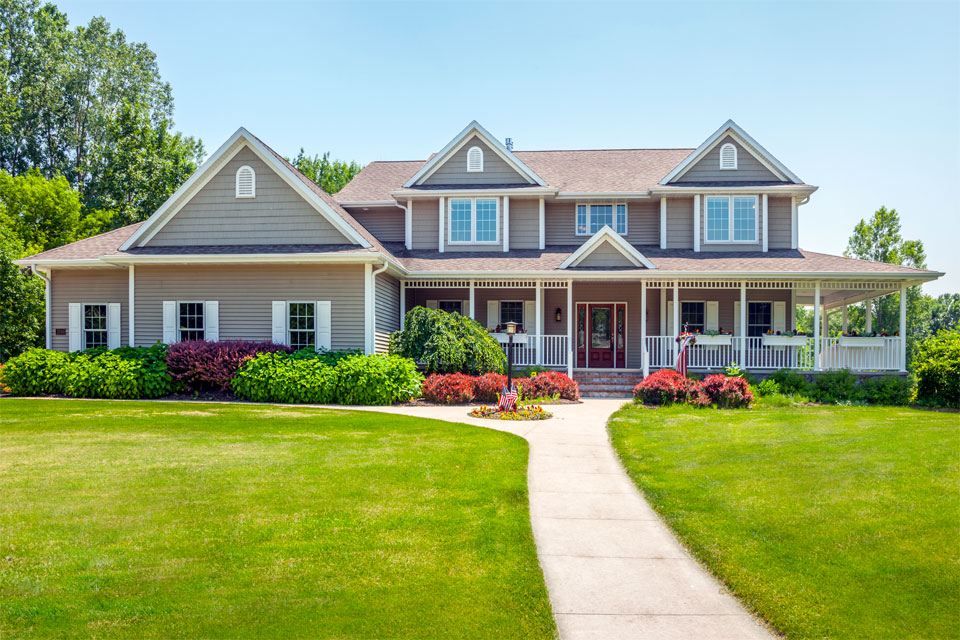
When you receive a handful of different Home Insurance quotes for the same property, it may seem like there is no rhyme or reason to how the rate is calculated. In reality, most insurance companies analyze a similar set of factors and any pricing variations are usually due to differences in risk assessment formulas, coverage options and limits, and homeowner discounts and credits.
While everything from the types of detached structures on a property to the home renovations that have been made since the house was purchased will be considered, it is the following five factors that generally form the basis for a homeowners policy premium:
1. Your home’s replacement cost, or the investment required to fully rebuild your home if it is destroyed by a covered event, is the foundational value for your Home Insurance premium. This number is based on the property elements most relevant to the rebuilding process, including but not limited to:
2. Where your home is located provides more insight about potential risks to your home and belongings. Historical weather patterns, proximity to bodies of water, and local construction and labor costs are a few of the location-specific factors that help determine appropriate levels of Dwelling and Personal Property Coverage for your house and contribute to the Home Insurance calculation.
3. Your home’s Fire Protection Class rating is a grade—ranging from 1 to 10—that reflects how well-prepared your community is to respond to a fire. Issued by the Insurance Services Office (ISO), these ratings are based on the infrastructure and resources available to help limit property losses due to a fire. Several factors influence your home’s grade, including:
4. The year your home was built tells more than just the age of your property and its essential home systems. Often, it provides additional perspective on the structural integrity of the materials, the caliber of craftsmanship used to build it, and the building codes and requirements of the time that may support loss prevention. Whether your home is new construction or on the town’s historic register, the Home Insurance calculation considers the potential for wear and tear, overall maintenance and repair costs, and the ease and expense of replacing damaged or outdated components.
5. Your home’s construction type is a key indicator of important protective qualities, such as strength and durability, pest resistance, natural insulation properties, and weather and fire resilience. For this reason, the Home Insurance rate for a standard wood-frame build versus a brick house, a log home, or modern modular or panelized construction may vary significantly—even if all the other key factors are exactly the same.
The importance of working closely with your local insurance professional to provide the information required for an accurate Home Insurance quote cannot be overstated. An experienced agent will ask all the necessary questions to capture details about your property that are crucial to this process. They also help make sure an insurance company neither overestimates your needs, which may lead to a higher premium than necessary, nor underestimates your requirements, which might leave you with a gap in coverage. Finally, these skilled professionals have a wealth of knowledge about available homeowners credits and discounts that may reduce the cost of your Home Insurance.
Click on the Find an Agent button to search for independent insurance agencies near you.
Contact the independent insurance agency you would like to work with by phone or email.
Leave it up to your agent to uncover the best coverage solutions for your valuable property.


